Iron Nanomaterials That Destroy Cancer Cells From the Inside
Iron Nanomaterials That Destroy Cancer Cells From the Inside

A Tiny Material With a Very Big Goal
Cancer research often advances in small, careful steps. Most breakthroughs are not dramatic cures appearing overnight but gradual improvements that stack over years. Still, every now and then a result appears that makes researchers pause for a moment and think, wait, this might actually be something different.
That is roughly the feeling surrounding a recent development from scientists at Oregon State University. The team has engineered a new iron based nanomaterial designed to destroy cancer cells from the inside while leaving healthy tissue largely untouched. The concept itself is not entirely new. Scientists have been exploring targeted cancer therapies for decades. However, the way this material works adds an interesting layer of chemical precision that feels unusually promising.
Instead of attacking tumors through broad toxicity, which is how traditional chemotherapy often works, this approach uses the tumor’s own internal chemistry against itself. It is less like dropping a bomb and more like triggering a reaction already waiting to happen.
Why Targeting Cancer Is Still So Difficult
To understand why researchers are excited, it helps to step back and remember the basic problem. Cancer is not a foreign invader like a virus or bacterium. It is made from our own cells, just behaving badly. That similarity makes it extremely difficult to attack tumors without harming normal tissue.
Chemotherapy, for example, targets rapidly dividing cells. That does damage cancer, but it also affects hair follicles, digestive lining, and bone marrow. Anyone who has seen the physical toll chemotherapy takes understands the tradeoff.
Radiation therapy can be more precise, yet even radiation has limits because nearby healthy tissue inevitably absorbs some exposure.
Researchers have therefore spent years trying to design treatments that recognize subtle chemical differences between cancer cells and normal cells. Those differences exist, but they are often small and inconsistent across tumor types.
This is where nanotechnology enters the conversation.
The Quiet Rise of Nanomedicine
Nanomedicine sounds futuristic, but in reality it has been developing quietly for quite some time. The idea is simple in principle. Build extremely small structures, thousands of times smaller than the width of a human hair, and use them to deliver drugs or trigger reactions inside specific cells.

At that scale, materials behave differently. Chemical activity can increase. Surface interactions become more important. Even electrical behavior changes.
The challenge is not building nanoparticles. Scientists have become very good at that. The challenge is making them behave predictably inside the body, which is a far more complex environment than a laboratory solution.
Blood flow, immune responses, and tissue barriers all influence where nanoparticles end up.
Sometimes they reach the tumor. Sometimes they do not.
That uncertainty has slowed clinical progress.
A Chemical Weakness Inside Tumors
One of the most interesting characteristics of cancer cells is their altered metabolism. Tumors often grow so quickly that their internal environment becomes chemically unstable.
Two features show up repeatedly.
First, tumor environments tend to be more acidic than normal tissue. Second, cancer cells often contain elevated levels of hydrogen peroxide.
On their own, these differences do not destroy the tumor. However, they create a chemical vulnerability.
If a treatment can convert hydrogen peroxide into highly reactive oxygen molecules, those molecules can damage cellular structures from the inside. Proteins begin to break down. Lipids become unstable. DNA suffers oxidative damage.
Eventually, the cell can no longer function.
This general concept forms the basis of a developing treatment strategy known as chemodynamic therapy.
Chemodynamic Therapy and Its Promise
Chemodynamic therapy works by triggering chemical reactions specifically inside tumor environments. Instead of delivering toxic drugs directly, researchers deliver catalysts that transform existing molecules into destructive reactive oxygen species.
This approach feels elegant because it uses the tumor’s own chemistry as fuel.
In theory, healthy tissue should experience less damage because the required chemical conditions are weaker outside tumors.
However, real biological systems rarely behave exactly as theory predicts.
Early versions of chemodynamic therapy produced encouraging results in laboratory models but often fell short in more complex biological environments. Tumor reduction occurred, but complete elimination remained inconsistent.
Researchers began asking why.
The Problem With Earlier Nanoagents
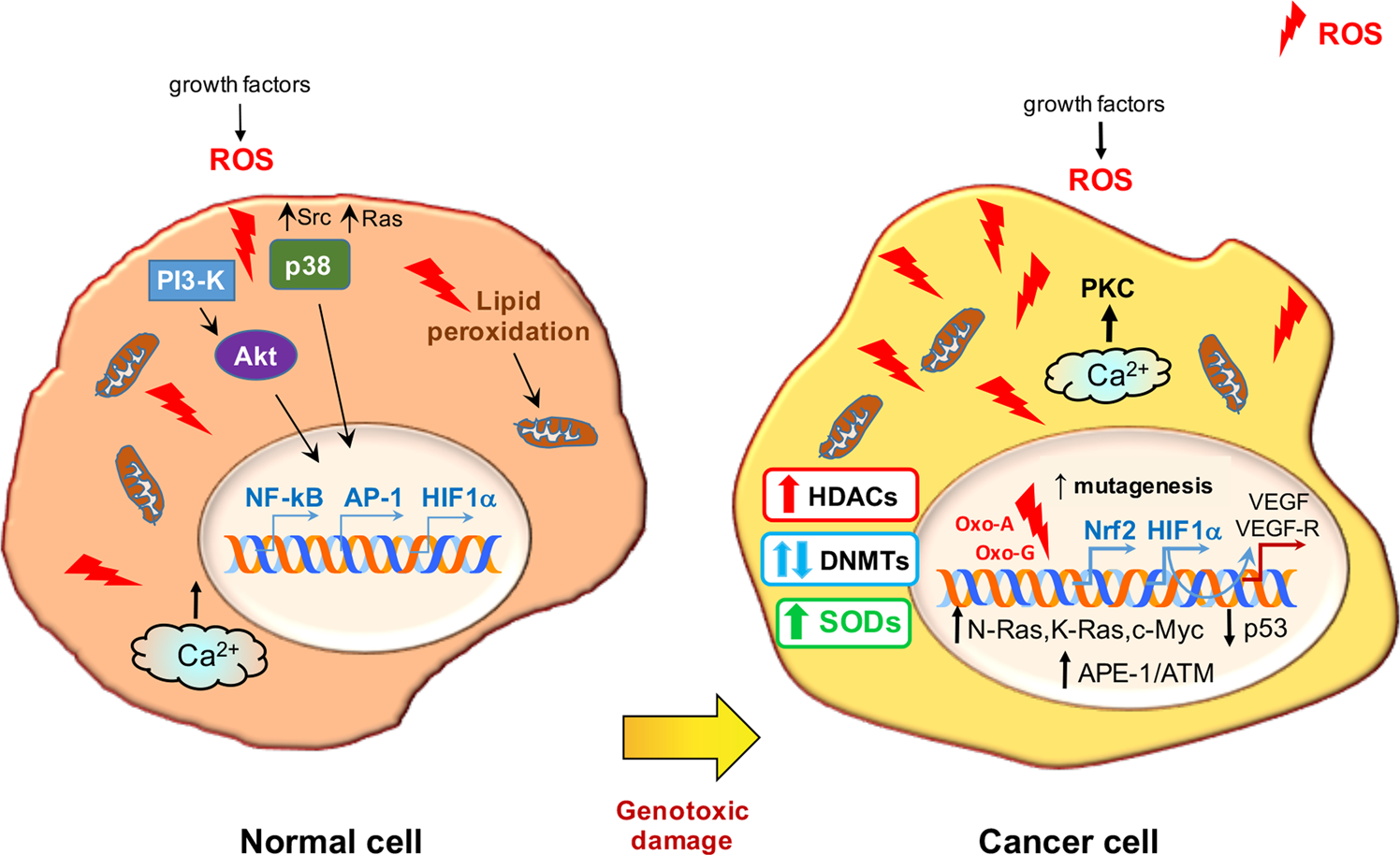
One limitation kept appearing. Most nanoagents designed for chemodynamic therapy produced only one type of reactive oxygen molecule.
Some generated hydroxyl radicals. Others produced singlet oxygen. Both are highly reactive and capable of damaging cancer cells.
Yet each reaction pathway alone sometimes lacked the sustained intensity needed to completely overwhelm tumor defenses.
Cancer cells, after all, are surprisingly adaptable. They often activate antioxidant systems that reduce oxidative damage.
So researchers started wondering whether combining multiple oxidative pathways could amplify the effect.
That idea led directly to the new iron based nanomaterial.
Designing a Dual Reaction System
The research team developed a nanoagent built from what scientists call a metal organic framework. These frameworks act like microscopic scaffolds that hold metal atoms in stable structural patterns.
Iron was chosen for a practical reason. Iron naturally participates in reactions that convert hydrogen peroxide into reactive oxygen molecules. This chemistry is already known in biological systems.
The innovation was not just using iron. It was designing the structure so that two separate oxidative reactions could occur simultaneously inside tumor cells.

That dual action appears to significantly increase oxidative stress.
Instead of one chemical pathway pushing the cell toward failure, two pathways operate together, creating a cascade effect.
Cells that might otherwise survive one reaction become overwhelmed when both occur at once.
From Laboratory Models to Animal Testing
Laboratory experiments showed strong toxicity toward multiple cancer cell lines while leaving noncancerous cells relatively unaffected. Results like this are encouraging but still preliminary.
The real test comes in living organisms, where complexity increases dramatically.
The researchers therefore moved to mouse models implanted with human breast cancer cells. This step helps approximate real tumor behavior while still allowing controlled experimental conditions.

What happened next drew attention.
Tumors disappeared.
Even more interesting, the tumors did not return during the observation period.
Equally important, the animals showed no measurable systemic toxicity. That detail matters just as much as tumor regression because many cancer treatments fail due to harmful side effects.
The study describing these findings appeared in Advanced Functional Materials.
Why Oxidative Stress Can Be So Effective

Oxidative stress sounds technical, but the concept is fairly intuitive.
Cells depend on controlled chemical balance. Reactive oxygen species disrupt that balance by stealing electrons from essential molecules.
Imagine oxidation like microscopic corrosion happening inside the cell. Structures weaken. Repair systems become overwhelmed.
Cancer cells are particularly sensitive to this type of damage because their metabolism already operates under stress.
Healthy cells typically maintain stronger antioxidant defenses.
That difference may help explain why targeted oxidative therapies sometimes show selective toxicity toward tumors.
However, biology rarely follows perfect rules.
A Moment of Caution Before Overexcitement
Whenever a study reports complete tumor regression in animal models, excitement rises quickly. Yet history suggests caution.
Many therapies that perform well in mice do not translate directly to humans.
Human tumors are more diverse. Human immune systems behave differently. Treatment scaling introduces additional variables.
Moreover, long term safety must be evaluated carefully. Nanoparticles can accumulate in organs such as the liver or spleen depending on their structure.
The researchers themselves acknowledge that additional testing is required before human trials can begin.
This is not a finished treatment. It is an encouraging step.
The Next Phase of Research

The team plans to test the nanoagent across additional cancer types, including pancreatic cancer, which remains one of the most difficult cancers to treat.
Pancreatic tumors often resist chemotherapy and are typically diagnosed at advanced stages. Any approach capable of improving outcomes in this area would have enormous clinical value.
Future experiments will also explore dosage optimization and distribution patterns within different tissues.
Funding support for the work includes contributions connected to the National Cancer Institute along with other biomedical programs.
Large scale validation requires significant resources, and institutional support plays a critical role in advancing experimental therapies toward clinical testing.
What Makes This Approach Feel Different
Many cancer therapies focus on blocking biological signals that tumors use to grow. Others aim to stimulate immune responses that help the body recognize cancer cells.
This nanomaterial approach operates at a more fundamental chemical level.
It does not rely heavily on genetic targeting or immune activation. Instead, it triggers destructive chemistry directly inside tumor environments.
There is something appealing about that simplicity.
Chemistry, after all, does not negotiate.
If the reactions occur at sufficient intensity, cellular structures fail.
However, simplicity in concept does not necessarily mean simplicity in practice.
Delivering nanoparticles precisely and consistently remains one of the largest technical challenges in nanomedicine.
The Broader Trend Toward Precision Oncology
Cancer treatment is gradually shifting away from one size fits all strategies toward highly targeted approaches.
Some treatments now focus on specific genetic mutations. Others use engineered immune cells. Still others deliver drugs using molecular carriers designed to attach to tumor receptors.
Nanotechnology fits naturally into this trend because nanoparticles can be engineered with extraordinary control over size, surface chemistry, and reactivity.
In the long term, researchers may combine nanomaterials with immunotherapy or gene targeted drugs to create layered treatment systems.
That kind of integration is already being explored.
Imagining Future Clinical Use
If future trials confirm both safety and effectiveness, treatments like this could potentially be administered through intravenous injection.
Nanoparticles would circulate through the bloodstream and accumulate preferentially in tumor tissue due to structural differences in tumor blood vessels.
Once inside the tumor environment, the chemical reactions would activate automatically.
No external trigger required.
This type of autonomous activation is attractive because it reduces the need for complex clinical equipment.
However, real world application depends on reproducibility across large patient populations.
The Human Side of Scientific Progress

Behind every technical description sits a quieter reality. Cancer research is not abstract for most scientists working in the field.
Many researchers have personal experiences with the disease. Family members. Friends. Mentors.
Those experiences often shape research motivation in ways that never appear in academic papers.
When a new experimental result shows complete tumor elimination in animal models, the emotional response is understandable.
Hope appears quickly.
Still, science moves carefully for good reason.
False hope can be dangerous if results are not validated through rigorous testing.
Where Things Stand Right Now
At the moment, the new iron based nanomaterial exists in the preclinical stage. That means the treatment has not yet entered human trials.
The experimental data are strong enough to justify further investigation, but several steps remain.
Additional cancer models must be tested. Long term toxicity studies must be completed. Manufacturing consistency must be demonstrated.
These processes take time.
Yet progress in nanomedicine has accelerated significantly over the past decade due to improvements in imaging, molecular modeling, and materials engineering.
What once required years to design can now be simulated far more efficiently.
A Quiet but Meaningful Step Forward
Not every scientific advance changes medicine immediately. Some simply open new directions.
This research appears to fall into that category.
The idea of combining dual oxidative reactions inside tumors is conceptually elegant and experimentally encouraging. Whether it ultimately becomes a clinical therapy remains uncertain.
However, it expands the toolkit researchers are building against cancer.
And sometimes progress happens exactly this way. Not through a single dramatic discovery, but through a sequence of careful innovations that gradually shift what becomes possible.
For now, the tiny iron structures developed in this study represent something both modest and hopeful.
A small material.
A complex idea.
And potentially, another step toward treatments that destroy cancer cells while leaving the rest of the body far less burdened than before.
Open Your Mind !!!
Source: ScienceDaily


Comments
Post a Comment