How Artificial Intelligence Is Changing the Way Scientists Discover Catalysts
How Artificial Intelligence Is Changing the Way Scientists Discover Catalysts
A Quiet Revolution in Materials Science
In laboratories around the world, scientists spend years trying to discover new materials that can make chemical reactions faster and cleaner. It sounds straightforward at first. Mix substances. Run a reaction. Measure what happens. Repeat.
However, anyone who has worked in chemistry knows the reality is slower and sometimes frustrating. A researcher might spend months testing variations of a single material only to find that none of them perform much better than the original.
That slow pace has defined catalyst discovery for decades.
Catalysts matter more than most people realize. They sit quietly inside industrial systems helping reactions happen faster and more efficiently. Without them, fuel cells would struggle to function, hydrogen production would be far less efficient, and pollution control technologies would fall behind.
Yet discovering new catalysts has traditionally been a process of patient experimentation. Scientists test one candidate material, then another, gradually building knowledge through trial and error.
Now something different is happening.
Artificial intelligence is beginning to change the rhythm of that process. Instead of testing one idea at a time, researchers can explore thousands or even millions of possible materials using computational models. It is not magic. Experiments still matter. But the search space suddenly becomes much larger and far more efficient.
And in the center of this shift are large artificial intelligence models.
Why Catalysts Matter in Everyday Life
Most people never see catalysts directly, yet they influence daily life constantly.
Inside a car exhaust system, catalysts help convert harmful gases into less dangerous compounds before they reach the atmosphere. In hydrogen production plants, catalysts help split molecules and drive reactions that produce cleaner fuels. Even many pharmaceutical manufacturing processes depend on them.
In simple terms, a catalyst is a material that speeds up a chemical reaction without being consumed by it. Think of it like a facilitator in a discussion. The facilitator keeps the conversation moving but does not become part of the final agreement.
That simple role has huge consequences.
A slightly better catalyst can reduce the energy needed for industrial reactions. Multiply that improvement across thousands of factories and the energy savings become enormous. Carbon emissions drop. Costs fall. Entire technologies become more viable.
Hydrogen energy is one example. Efficient catalysts could make hydrogen production cleaner and cheaper, which might help expand hydrogen based energy systems.
However finding those materials has historically been difficult. The number of possible combinations of elements is almost unimaginably large.
Testing them one by one in a lab would take centuries.
The Old Way of Discovering Catalysts
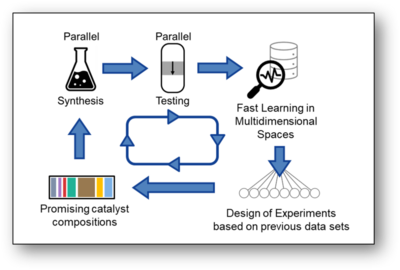
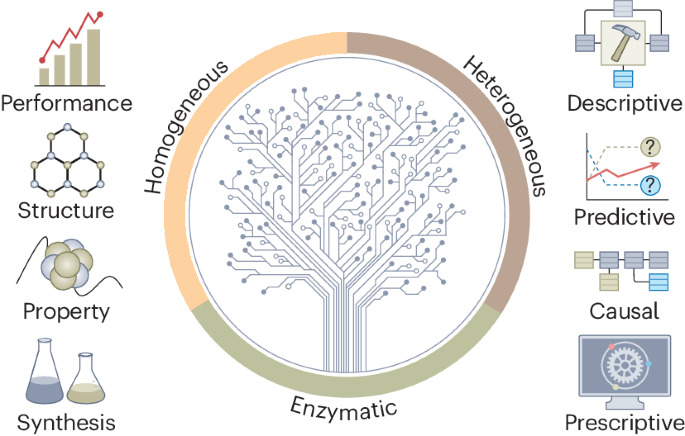
For most of the twentieth century catalyst discovery followed a familiar pattern.
A scientist proposed a material based on theory or intuition. Then came synthesis. The material was created in the lab. After that researchers tested it in controlled reactions to see how well it performed.
Sometimes the results were promising. Often they were disappointing.
Then the cycle began again.
Change the composition slightly. Adjust the structure. Try a different temperature. Run the reaction again.
Over time researchers developed remarkable expertise using this approach. Still, the pace remained slow.
One chemist once described catalyst discovery as searching for a needle in a mountain sized haystack. That description might even be generous.
There are simply too many possible materials.
Imagine choosing combinations from dozens of elements arranged in countless atomic structures. The possibilities quickly climb into numbers that are difficult even to visualize.
That is where artificial intelligence begins to make a difference.
Artificial Intelligence Enters the Laboratory

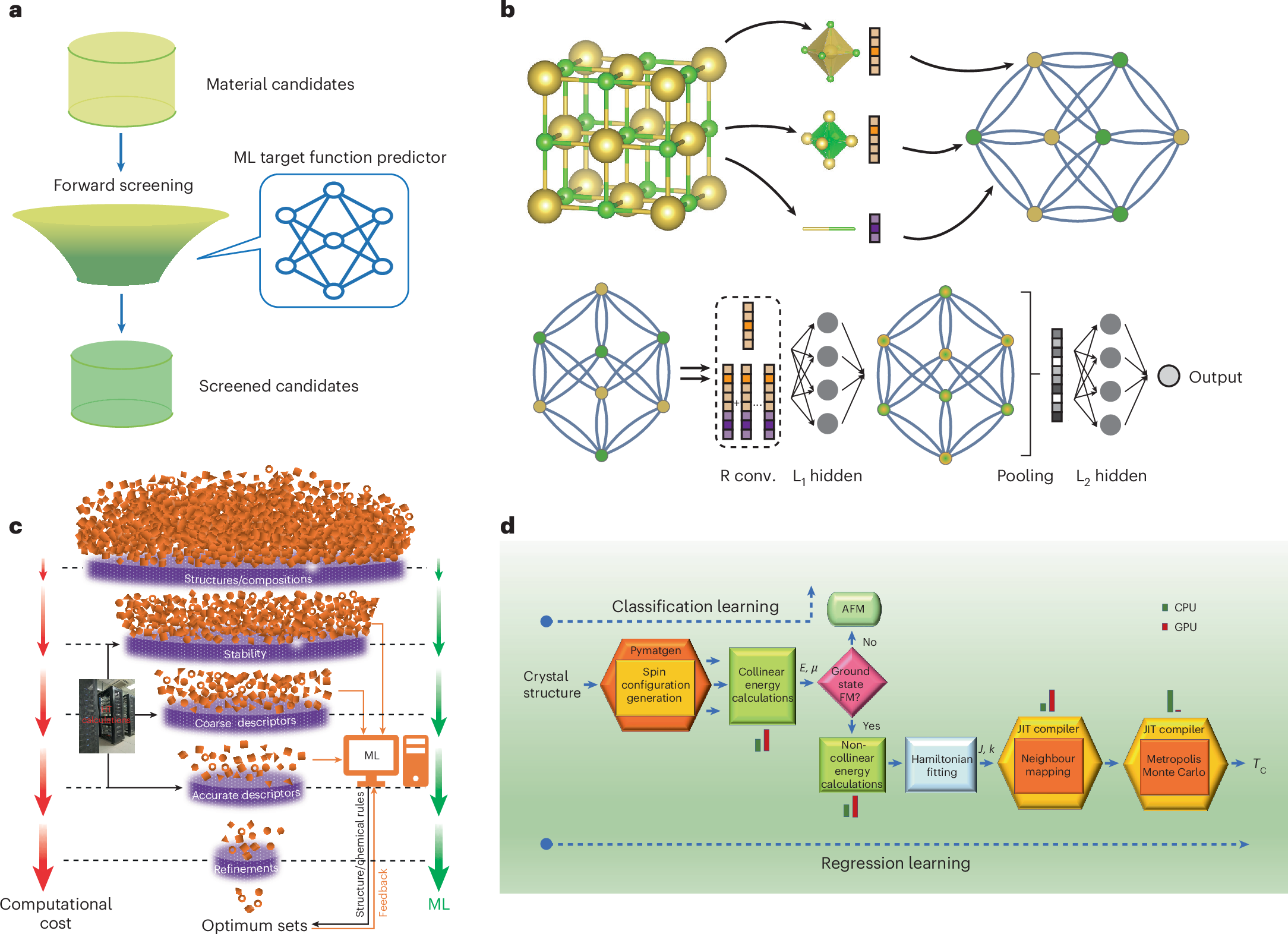


Artificial intelligence systems excel at identifying patterns within large datasets. In fields like image recognition or language translation this ability is already well known.
Materials science is now beginning to benefit from the same capability.
Instead of relying only on human intuition, researchers can train AI systems on massive databases of known catalysts and chemical reactions. These databases contain information about atomic structures, reaction rates, and experimental conditions gathered from decades of research.
When AI models analyze that information, patterns emerge.
Some structures tend to perform well for certain reactions. Other configurations consistently fail. Over time the system learns which atomic arrangements are likely to succeed.
That knowledge allows scientists to explore chemical possibilities far more efficiently.
Rather than synthesizing thousands of materials blindly, researchers can narrow their focus to the most promising candidates predicted by the model.
The laboratory still plays a crucial role. Experiments verify predictions and generate new data. Yet the search becomes guided instead of random.
It is a subtle change but an important one.
The Role of Machine Learning Interatomic Potentials

One of the technologies enabling this transformation is known as machine learning interatomic potentials.
The name sounds technical, and admittedly it is. Still the idea behind it can be explained in simpler terms.
Chemical reactions occur because atoms interact with one another through forces. Those interactions determine how molecules form, break apart, or rearrange.
Traditional physics based simulations can calculate these interactions with high accuracy. However they often require enormous computational power and time.
Machine learning interatomic potentials provide a faster alternative.
Researchers train these models using high quality quantum mechanical calculations. Once trained, the model can approximate atomic interactions quickly while maintaining good accuracy.
That speed allows scientists to simulate the behavior of atoms across large chemical systems. They can test how a catalyst surface might interact with molecules long before the material exists physically.
The result is a kind of virtual laboratory.
Thousands of catalyst candidates can be evaluated through simulation before anyone mixes chemicals in a beaker.
This dramatically reduces the number of physical experiments required.
Large Language Models Enter Scientific Research


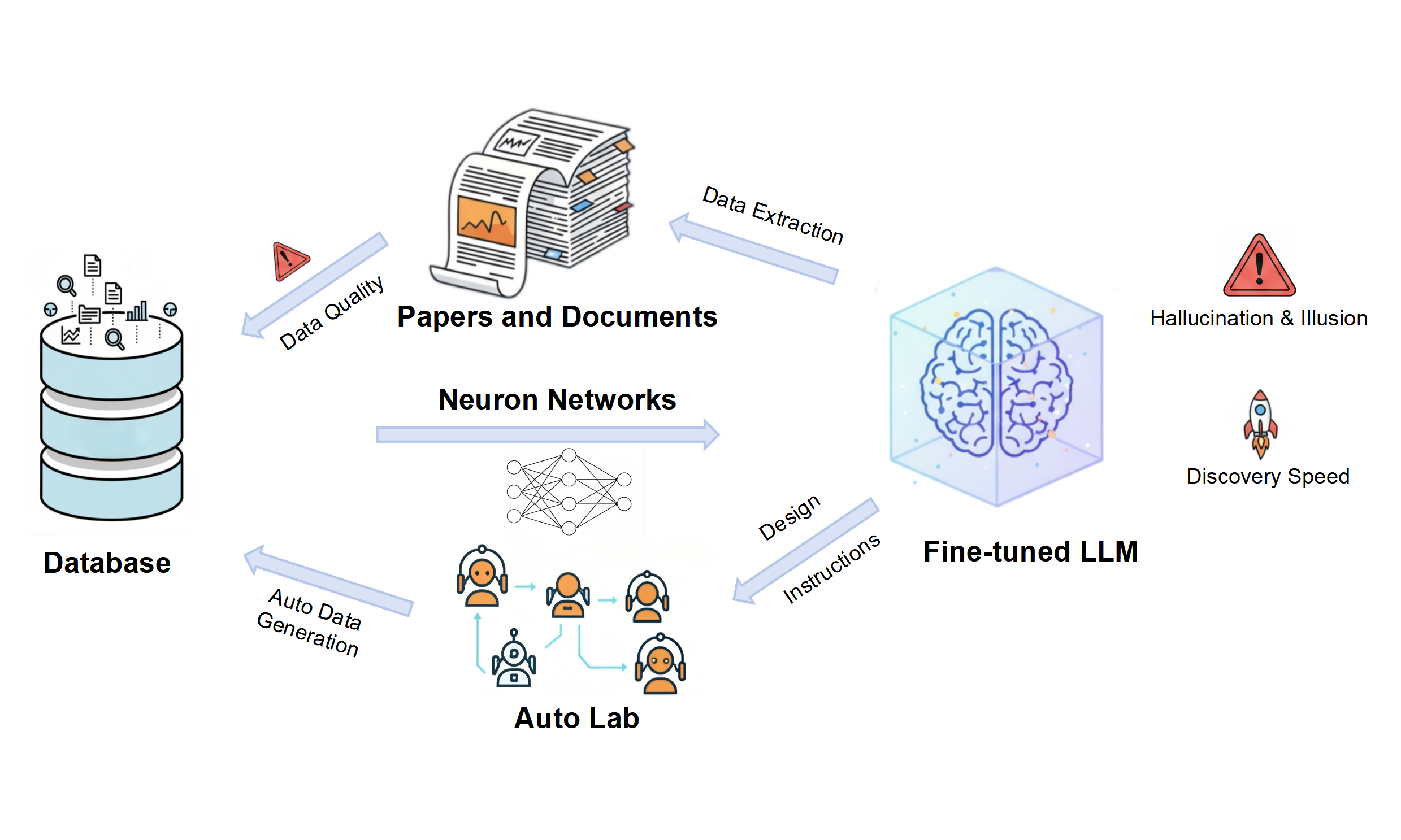
Another surprising tool in this emerging workflow is the large language model.
Most people associate these systems with writing assistance or conversation. However they are increasingly useful in scientific research as well.
Modern science produces an enormous amount of literature. Thousands of research papers appear every month across chemistry journals, conference proceedings, and institutional archives.
No individual researcher can read all of it.
Large language models can help analyze that body of knowledge. They identify connections between studies, summarize complex findings, and highlight potential research directions.
Imagine a system capable of scanning decades of catalyst research and identifying patterns that humans might overlook.
Perhaps a specific atomic configuration appears repeatedly in successful catalysts across unrelated reactions. Perhaps a particular experimental condition consistently improves performance.
A language model can detect those relationships by analyzing written scientific reports.
When combined with computational modeling tools, the system becomes even more powerful.
The AI not only reads scientific literature but also proposes materials worth testing.
The Rise of Integrated Discovery Platforms
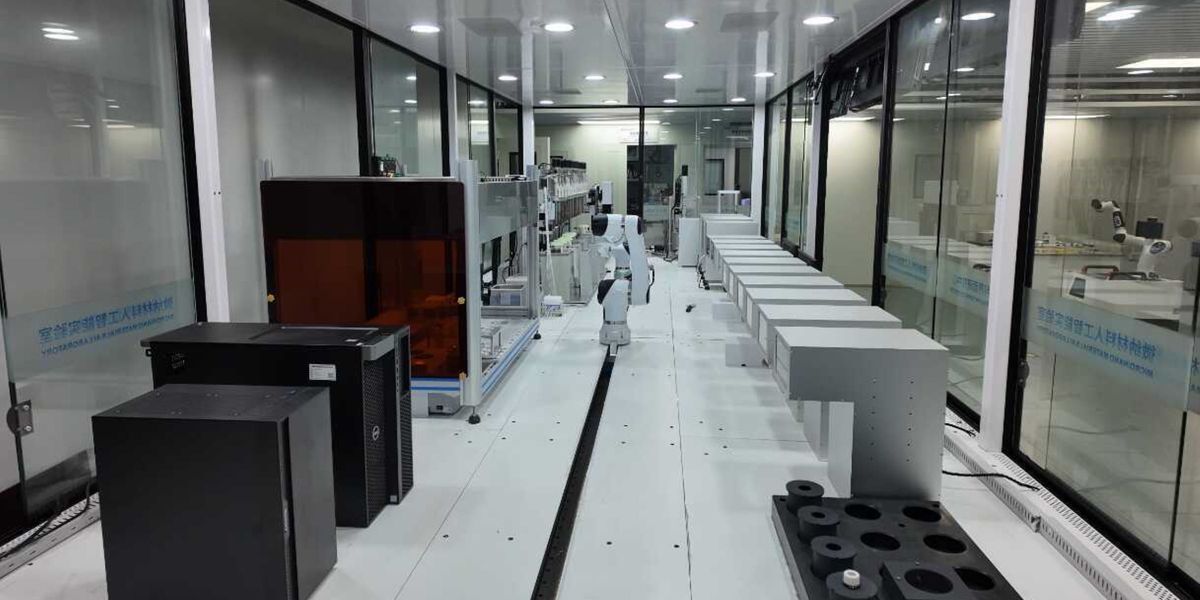

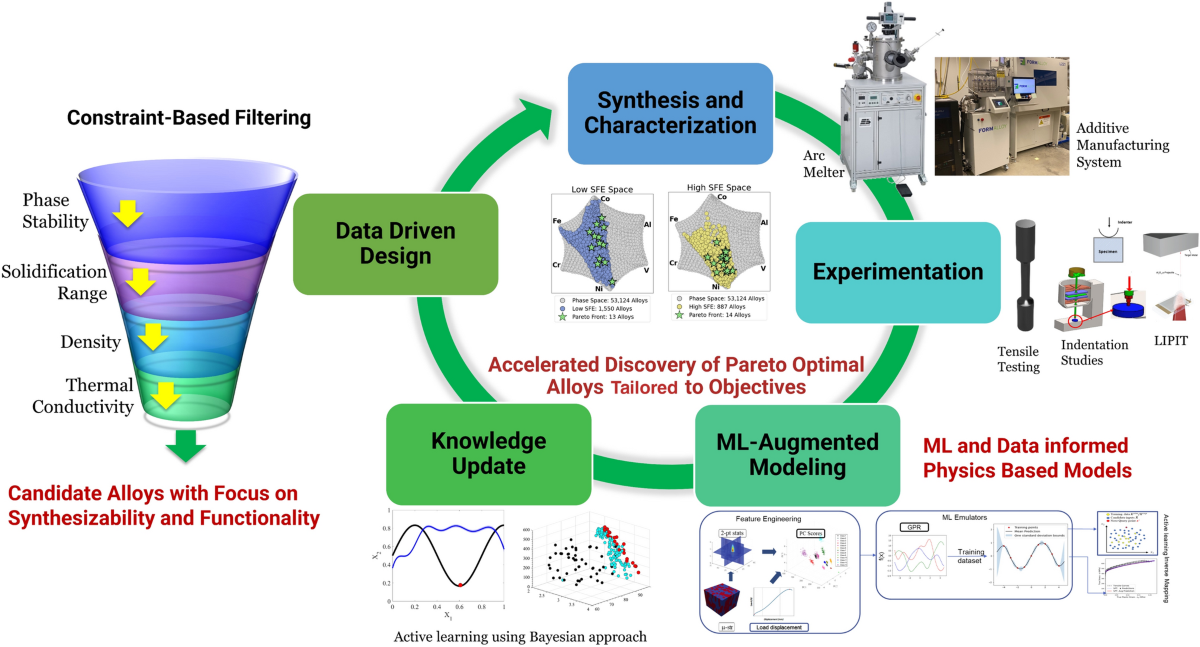

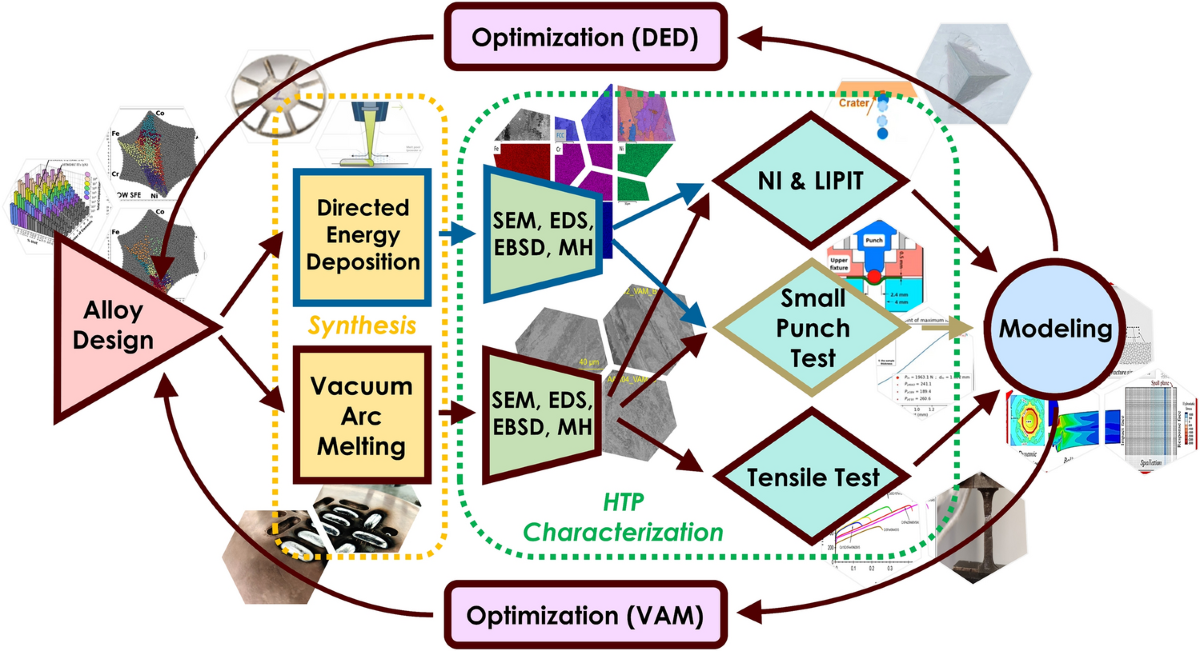
Researchers are now envisioning something even more ambitious.
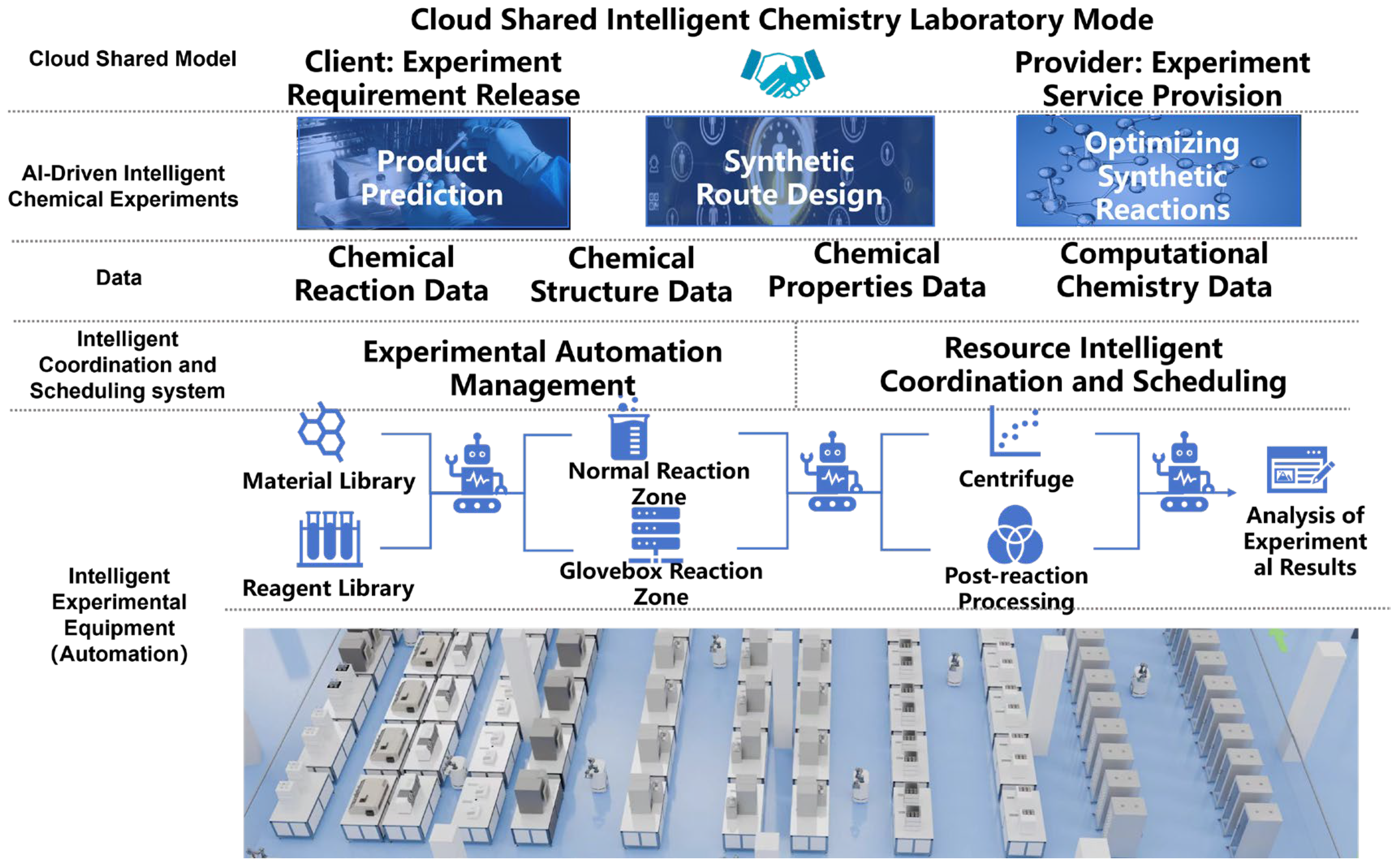
Instead of separate tools operating independently, future laboratories may integrate databases, simulations, artificial intelligence models, and automated experiments into a single system.
Picture a continuous discovery platform.
First the AI analyzes existing data and predicts promising catalyst designs. Then automated systems synthesize those materials in the lab. Instruments test their performance. The results feed back into the database, improving the model.
The cycle repeats.
Prediction leads to synthesis. Synthesis leads to testing. Testing produces new data. The data improves future predictions.
Over time the system learns from every experiment.
This concept is often called a closed loop discovery process.
In such a system the pace of innovation accelerates continuously. Each cycle of learning becomes faster and more informed than the previous one.
It is not difficult to imagine laboratories where human researchers guide strategy while AI systems manage large portions of the experimental workflow.
Beyond Catalysts
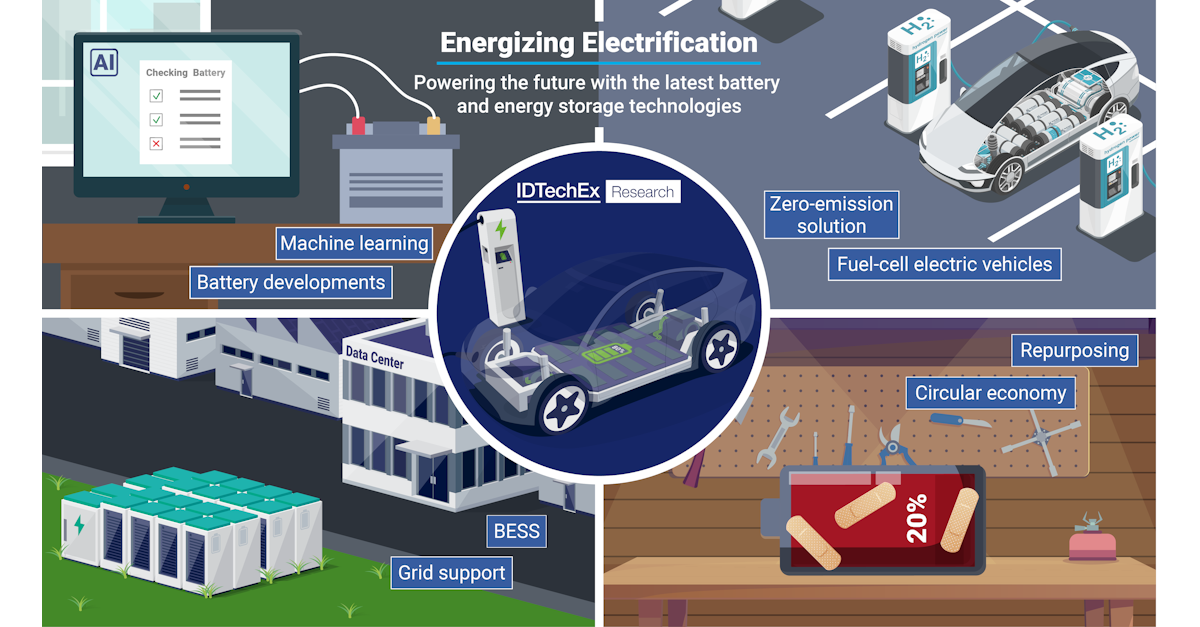


The implications of these methods extend far beyond catalysis.
Many areas of materials science involve the same fundamental challenge. Researchers must explore vast numbers of possible atomic arrangements to find structures with desirable properties.
Battery materials present one example.
Scientists seek compounds that store more energy, charge faster, and last longer without degradation. Testing every possible combination experimentally would take an unrealistic amount of time.
Hydrogen storage materials present another challenge. Efficient storage systems are essential if hydrogen is to become a practical energy carrier.
Artificial intelligence can help navigate these enormous design spaces.
By combining experimental data, simulations, and literature analysis, AI systems guide researchers toward promising directions much faster than traditional methods.
Still it is worth acknowledging a subtle point.
Artificial intelligence does not replace scientific reasoning. Human insight remains essential. Models can propose ideas, but researchers must interpret results, design experiments carefully, and understand underlying mechanisms.
The partnership between human curiosity and machine computation appears to be the real breakthrough.
A New Rhythm for Scientific Discovery
Scientific progress has always followed a certain rhythm. Hypothesis. Experiment. Observation. Revision.
Artificial intelligence is not rewriting that rhythm completely. Rather it is accelerating the tempo.
Ideas that once required years of testing can now be explored computationally in days or weeks. Promising candidates emerge sooner. Failures are identified earlier.
The effect compounds over time.
A faster discovery cycle means more opportunities for breakthrough materials that support clean energy, efficient manufacturing, and sustainable technology.
Of course there are still limitations. Models depend on the quality of available data. Predictions are not perfect. Real world chemistry occasionally surprises even the most sophisticated simulations.
Yet the direction seems clear.
The combination of large datasets, machine learning, and automated experimentation is reshaping how materials science operates.
Catalyst discovery is simply one of the first areas where the impact is becoming visible.
And if current trends continue, future generations of scientists may look back at the old trial and error approach the way we now look at early mechanical calculators.
Useful in their time. But slow compared with what came next.
Open Your Mind !!!
Source: Phys.org


Comments
Post a Comment