How Ancient Neanderthal Relationships Still Shape Modern Human DNA
How Ancient Neanderthal Relationships Still Shape Modern Human DNA

Ancient Encounters Written Inside Our DNA
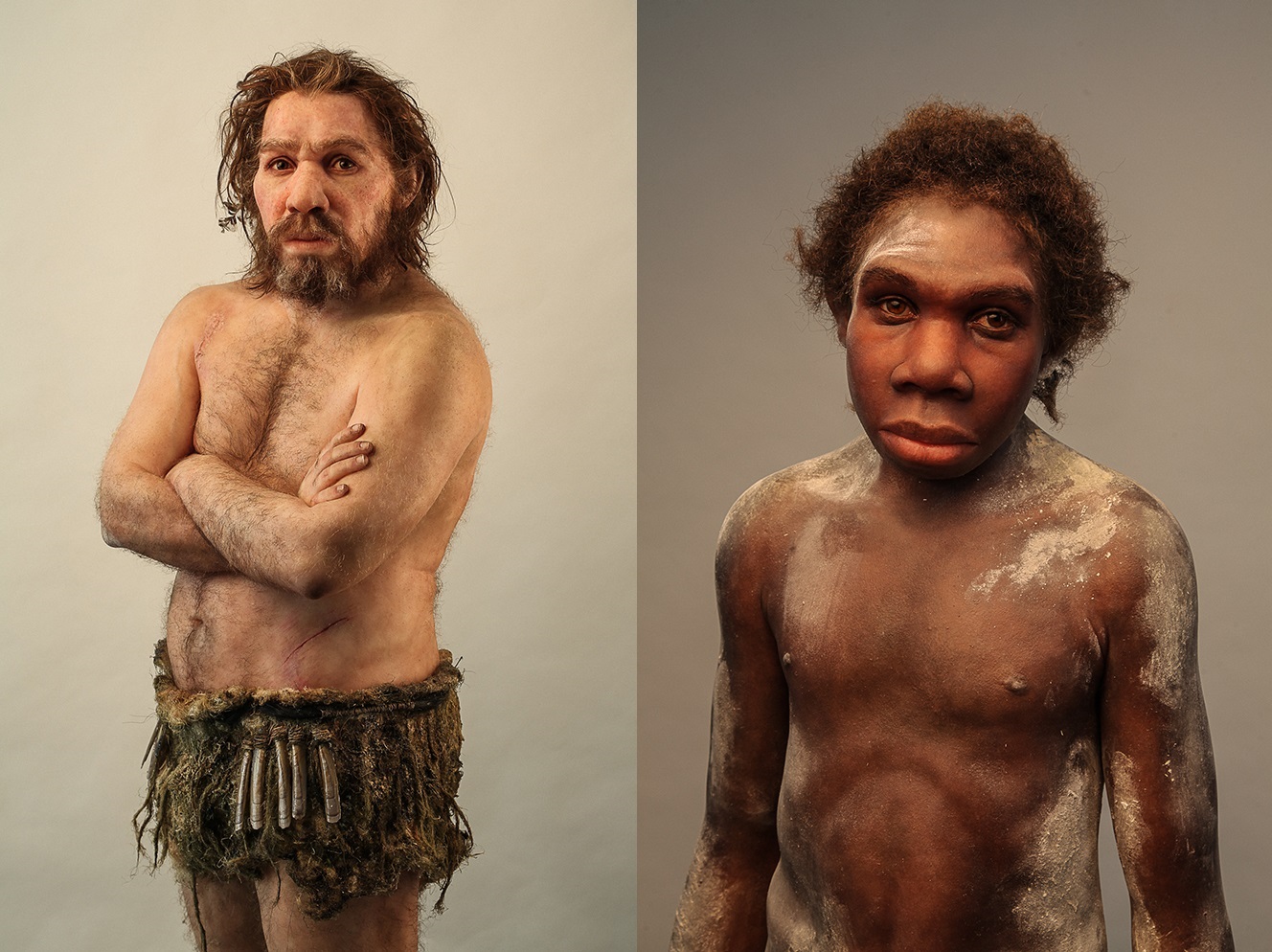
If you take a random genetic sample from almost any person living outside Africa, there is a small but unmistakable trace of Neanderthal ancestry hiding in the data. It is not dramatic. It does not change how we look in obvious ways. Yet it is there, quietly embedded across multiple chromosomes, like faint fingerprints left from meetings that happened tens of thousands of years ago.
For years I assumed this was a neat but simple fact. Humans migrated. Humans met Neanderthals. They interbred. End of story. But the deeper genetic research goes, the less tidy the picture becomes.
One piece of the puzzle in particular has bothered geneticists for decades. The human X chromosome contains long stretches where Neanderthal DNA is almost completely absent. Not reduced. Not diluted. Nearly gone. That pattern is too structured to be random, yet for a long time no explanation fully fit.
A recent study suggests that the answer may have less to do with broken biology and more to do with human behavior. That shift, from genetics alone to social interaction, changes how we imagine those ancient encounters.
The Long Separation Before the Meeting

Modern humans and Neanderthals did not suddenly appear as separate species overnight. Both groups trace back to a shared ancestral population roughly 600000 years ago. Over immense spans of time, populations drifted apart geographically and genetically.
What became Homo sapiens developed primarily in Africa. Meanwhile, Neanderthals spread across Eurasia, adapting to colder climates, different ecosystems, and very different survival pressures.
These two human groups lived apart long enough to accumulate noticeable physical and genetic differences. Neanderthals developed stockier bodies, broader noses, and heavier bone structures. Modern humans evolved more gracile skeletal forms and different cranial proportions.
Yet separation does not mean isolation forever.
When modern humans began migrating out of Africa around 60000 to 70000 years ago, the two populations crossed paths multiple times across the Middle East and Eurasia. These encounters were not always hostile. At least some of them led to interbreeding.
Today, most people with non African ancestry carry roughly two percent Neanderthal DNA. That number sounds small until you realize how many generations have passed since those encounters.
A Genetic Mystery Focused on One Chromosome
Among all chromosomes, the X chromosome behaves differently. It is inherited in a pattern that immediately complicates genetic interpretation.
Females carry two X chromosomes. Males carry one X and one Y. This simple difference has enormous consequences for how genetic material moves through populations over time.
Researchers noticed that while Neanderthal DNA appears scattered across many human chromosomes, the X chromosome contains unusually large regions where Neanderthal ancestry is almost missing. That pattern has been replicated repeatedly in different datasets.

The first interpretation seemed logical. Many scientists proposed that Neanderthal DNA on the X chromosome might have caused fertility issues when combined with modern human genes. Natural selection would then gradually remove those segments across thousands of generations.
The idea made sense biologically. Hybrid fertility problems are common in nature. However, the evidence never felt completely convincing.
Some genomic regions showed removal. Others did not. The pattern lacked the uniformity expected from strong biological incompatibility alone.
That lingering inconsistency kept the question open.
A New Approach From University of Pennsylvania

A recent research effort approached the problem from a different angle. Instead of assuming genetic failure, the researchers asked a more behavioral question.
What if the structure of ancient mating patterns shaped the genetic outcome?
To explore this possibility, the team compared genomes from three well preserved Neanderthal individuals with DNA from African populations whose ancestors never encountered Neanderthals. These African genomes functioned as a clean reference point.
The Neanderthal samples included individuals recovered from sites associated with regions such as the Altai Mountains and the Vindija Cave, along with another specimen from the Chagyrskaya region. Each genome provided a snapshot of Neanderthal genetic structure at different times and locations.
By comparing how DNA fragments appeared across chromosomes, researchers could track how genetic material moved between populations after interbreeding events.
The expectation under the old hypothesis was straightforward. If incompatibility caused the loss of foreign DNA, both species should show similar reductions in the same chromosomal regions.
That is not what the data showed.
The Unexpected Pattern That Changed the Interpretation

The results were surprising enough to force a rethink.
Neanderthal genomes contained significantly more modern human DNA on their X chromosomes than on other chromosomes. The increase reached about sixty two percent. That is not a small fluctuation. It is a strong directional pattern.
Modern humans, meanwhile, showed the opposite trend. Their X chromosomes contained very little Neanderthal DNA compared with other parts of the genome.
If biological incompatibility were the main driver, both groups should show reductions in foreign DNA on the X chromosome. Instead, the asymmetry suggested something else was happening.
At this point the explanation becomes almost disarmingly simple.
Repeated pairings between Neanderthal males and human females could naturally produce exactly this pattern.
Why Sex Specific Pairing Matters More Than It First Appears
Inheritance through the X chromosome follows rules that quietly shape long term genetic outcomes.
A female carries two X chromosomes, one from each parent. A male carries one X chromosome inherited from his mother and one Y chromosome inherited from his father.
Imagine repeated pairings between Neanderthal males and human females.
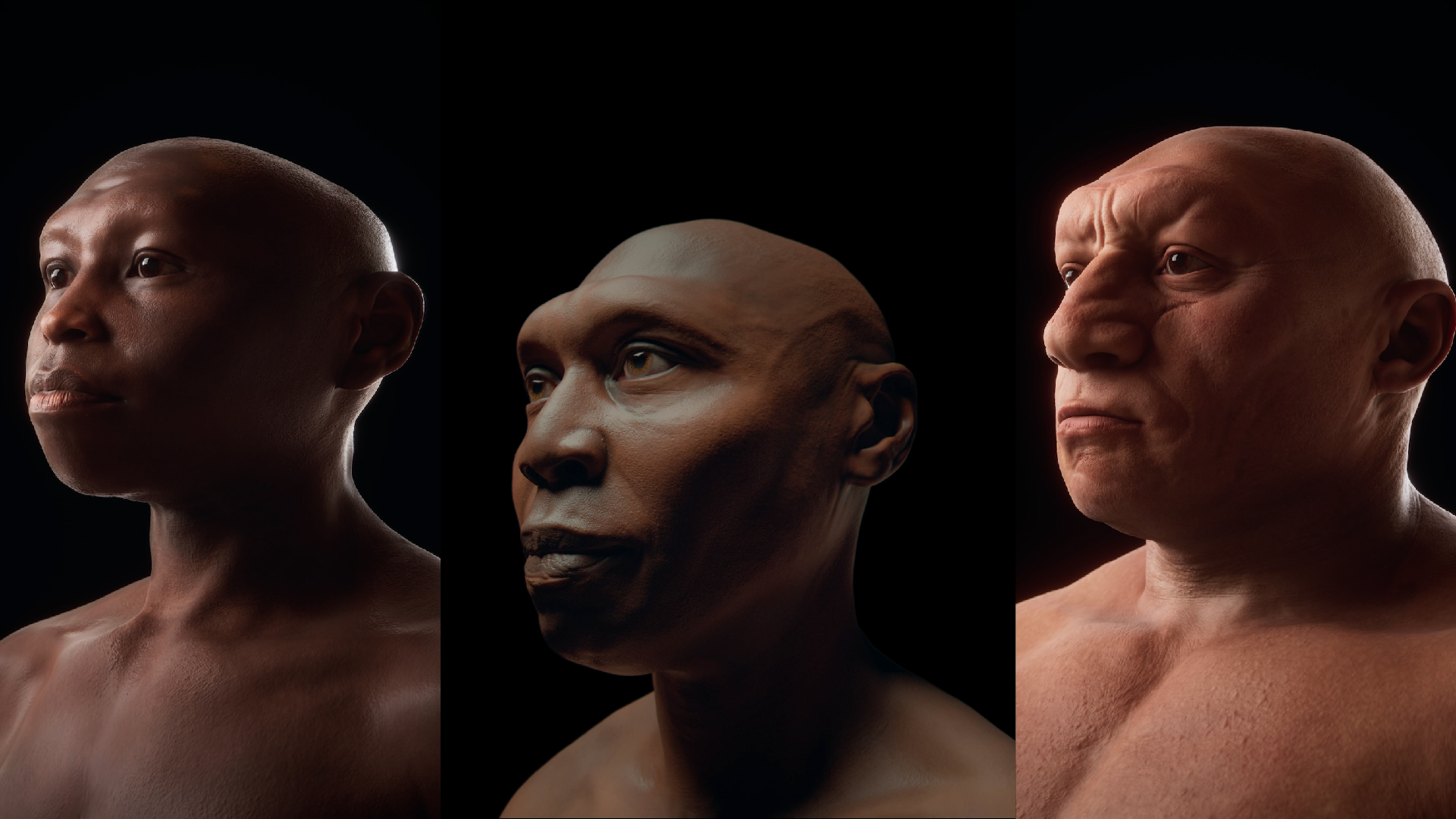
Daughters from these unions would inherit one X chromosome from each parent. Sons would inherit the human X chromosome from their mother and the Neanderthal Y chromosome from their father.
Across generations, the human X chromosome would spread efficiently into Neanderthal populations. Meanwhile, the Neanderthal X chromosome would become diluted within modern human populations because fewer transmission paths exist.
When researchers simulated this pattern using population models, the distribution closely matched the real genomic data.
No complicated biological incompatibility was required. No extreme fertility problems needed to be assumed.
Behavior alone could explain the outcome.
A Reminder That Evolution Includes Social Behavior
There is a subtle but important shift in perspective here.
When people think about evolution, they often imagine only physical adaptation or genetic mutation. However, social behavior also shapes genetic history.
Who pairs with whom matters. Cultural interaction matters. Migration patterns matter. Even small consistent biases, repeated across thousands of years, can leave measurable marks in modern DNA.
This does not necessarily mean those ancient encounters followed a single social pattern everywhere. Human societies are rarely that uniform.
Still, the genetic signal suggests that certain types of pairings occurred more frequently than others.
That conclusion raises new questions rather than closing the case.
Evidence That Gene Exchange Worked in Both Directions

Earlier genetic research examined Neanderthal Y chromosomes and found evidence of gene flow moving from modern humans into Neanderthal populations as well.
This indicates that interbreeding was not a one direction event. Genetic exchange occurred in multiple directions across different periods.
However, the distribution appears uneven.
Some patterns suggest repeated integration of human genetic material into Neanderthal populations. Other patterns indicate limited persistence of certain Neanderthal genes within modern humans.
These differences could reflect demographic realities rather than biological incompatibility.
Population size alone might have played a role. Modern human populations expanded rapidly during migration waves, while Neanderthal populations appear to have remained smaller and more fragmented.
In such conditions, genetic dilution can occur naturally without requiring strong selection pressures.
The Role of Migration and Group Structure
Another explanation researchers tested involved sex specific migration.
For example, if females moved between groups more frequently than males, genetic patterns could shift accordingly. However, models based on migration alone required many assumptions about ancient population movements across vast geographic ranges.
The mating bias explanation required fewer variables and produced cleaner alignment with the observed genomic structure.
That does not automatically prove it is the complete answer. Ancient population dynamics were almost certainly complex.
Still, when the simplest explanation fits the data well, researchers tend to treat it seriously.
Future work will likely focus on reconstructing social organization within Neanderthal communities. Questions remain about whether individuals moved between groups frequently or whether cultural traditions influenced partner selection.
Imagining the Human Side of These Encounters

It is easy to reduce this topic to statistics and chromosomes, but there is a deeply human dimension beneath the data.
At some point tens of thousands of years ago, individuals from two distinct human groups met face to face.
Not every meeting led to cooperation. Not every encounter led to violence either.
Some led to relationships.
We will never know the languages spoken during those interactions or the social rules guiding them. Yet the genetic record suggests that at least some of those connections were stable enough to produce descendants who survived and reproduced.
In other words, the story did not end with a single generation.
It continued.
Why the X Chromosome Keeps Appearing in Evolutionary Research
The X chromosome appears frequently in studies of hybrid populations across many species. Because of its unique inheritance pattern, it often reveals subtle evolutionary processes more clearly than other chromosomes.
Genes related to reproduction also tend to cluster in regions influenced by X chromosome dynamics. That makes it a sensitive indicator of compatibility or selection pressures.
However, the new findings serve as a caution against assuming every pattern must come from biological incompatibility.
Sometimes population structure or mating behavior can produce similar results.
Distinguishing between these explanations requires careful modeling and comparative analysis.
What This Means for Understanding Neanderthal Disappearance

Neanderthals disappeared around 40000 years ago, though their genetic legacy persists.
Researchers still debate why their populations declined. Climate variability, competition, disease, and demographic instability have all been proposed as contributing factors.
Interbreeding may also have played a role, not as a direct cause of extinction but as part of gradual absorption into expanding modern human populations.
If gene flow moved strongly from humans into Neanderthal groups, over time those groups may have become genetically integrated rather than completely replaced.
The reality is probably more nuanced than any single explanation.
Human history rarely follows a clean narrative.
A Genetic Archive Still Being Decoded
Modern DNA functions almost like an archaeological archive written in biological code. Every generation reshuffles fragments, yet patterns persist long enough for researchers to reconstruct ancient events.
Advances in sequencing technology have dramatically improved resolution over the past decade. What once required massive assumptions can now be tested using large genomic datasets and computational simulations.
Even so, interpretation remains challenging.
Genetic patterns rarely tell complete stories by themselves. They provide clues. Context still matters.
Anthropology, archaeology, and climate science all contribute pieces of the larger puzzle.
The Limits of What We Can Know
There is a temptation to imagine that genetics will eventually answer every question about human origins. That expectation may be unrealistic.
DNA can reveal probabilities and patterns, but it cannot directly describe emotions, social rules, or individual motivations.
When researchers infer mating biases, they are describing statistical outcomes across many generations, not documenting personal relationships.
It is worth keeping that distinction in mind.
Scientific interpretation works best when it remains cautious.
Why This Study Changes the Tone of the Conversation

For more than two decades, discussions about Neanderthal and human interbreeding often emphasized incompatibility. The narrative leaned toward biological conflict.
The new interpretation introduces something different.
Social interaction becomes central.
Instead of focusing only on which genes failed, researchers are now asking how ancient communities interacted. That shift broadens the conversation beyond genetics into behavior and culture.
It also makes the story feel more recognizably human.
After all, evolution does not operate in a vacuum. It unfolds through real populations making real decisions within environmental constraints.
A Continuing Story Still Hidden in Our Cells
Every person carrying Neanderthal DNA represents a tiny continuation of those ancient encounters.
Most of us never notice it. The genetic fragments are small and scattered.
Yet collectively they preserve a record older than written history.
The recent findings about the X chromosome remind us that evolution is not only shaped by mutation and selection. It is also shaped by interaction, migration, and the unpredictable patterns of social behavior.
There is something quietly profound about that idea.
Our genomes are not just biological instructions. They are historical documents.
And in some places, especially within the X chromosome, they still carry echoes of meetings that happened tens of thousands of years ago, when different kinds of humans shared the same landscapes and, at least sometimes, shared their lives.
Open Your Mind !!!
Source: ArcheologyNews


Comments
Post a Comment