New Light Therapy Cap Shows Breakthrough Potential for Hair Loss Treatment
Scientists Discover Powerful Light Treatment for Hair Regrowth

A Flexible Light Therapy Hat Could Change How We Think About Hair Loss


Hair loss has always carried an emotional weight that goes far beyond biology. For some people it begins quietly, maybe a few extra strands on a pillow or a widening part line noticed under bright bathroom lighting. For others it arrives faster and feels impossible to ignore. Either way, the experience tends to trigger the same internal reaction. People start searching for answers.
Over the years the solutions have ranged from the practical to the extreme. Special shampoos, nutritional supplements, prescription medications, and surgical transplants all promise improvement. Some help. Many do not. Most come with tradeoffs.
Now a research group in Korea is exploring something that feels different. Instead of chemicals or surgical procedures, they are working on a wearable light therapy system designed to influence the behavior of aging hair cells directly.
The concept sounds futuristic at first, yet the science behind it has been quietly evolving for decades.
Where This Research Is Coming From
The project is being developed by scientists at Korea Advanced Institute of Science and Technology with additional collaboration and financial support from City University of Hong Kong. Their goal is not simply to create another hair loss gadget. They are attempting to refine a technique known as photobiomodulation so that it becomes more precise and more practical for daily use.
Photobiomodulation refers to the use of specific light wavelengths to influence cellular activity. Researchers have experimented with light therapy for wound healing, inflammation reduction, and tissue repair. Hair follicles, it turns out, also respond to light when the wavelengths are carefully tuned.
The Korean team focused on a particular group of cells called dermal papilla cells. These cells sit at the base of each hair follicle and act almost like a biological control center for hair growth cycles.
When these cells weaken with age, the follicle gradually produces thinner and shorter hair strands. Eventually, growth may stop entirely.
Why Current Hair Loss Treatments Feel Limited
Anyone who has explored hair loss treatments already knows the landscape can feel frustrating. There are only a handful of widely accepted medical options, and none are perfect.
One of the most common treatments is topical minoxidil. Many people have seen the small foam bottles sold in pharmacies. The treatment works for some individuals by extending the growth phase of hair follicles. However, results vary widely. Some users experience visible regrowth, while others notice little change even after months of consistent use.

Another option involves prescription medication that alters hormone activity. While effective for certain patients, it also introduces potential side effects that make some people hesitant.
Because of these limitations, interest in non drug approaches has grown steadily. Low level light therapy devices, especially helmet style products, have already entered the market. Yet those designs often feel bulky and inconvenient. Wearing a rigid plastic helmet at home several times per week is not exactly appealing.
The Korean research team recognized that usability matters just as much as scientific effectiveness.
The Shift Toward Flexible Light Technology
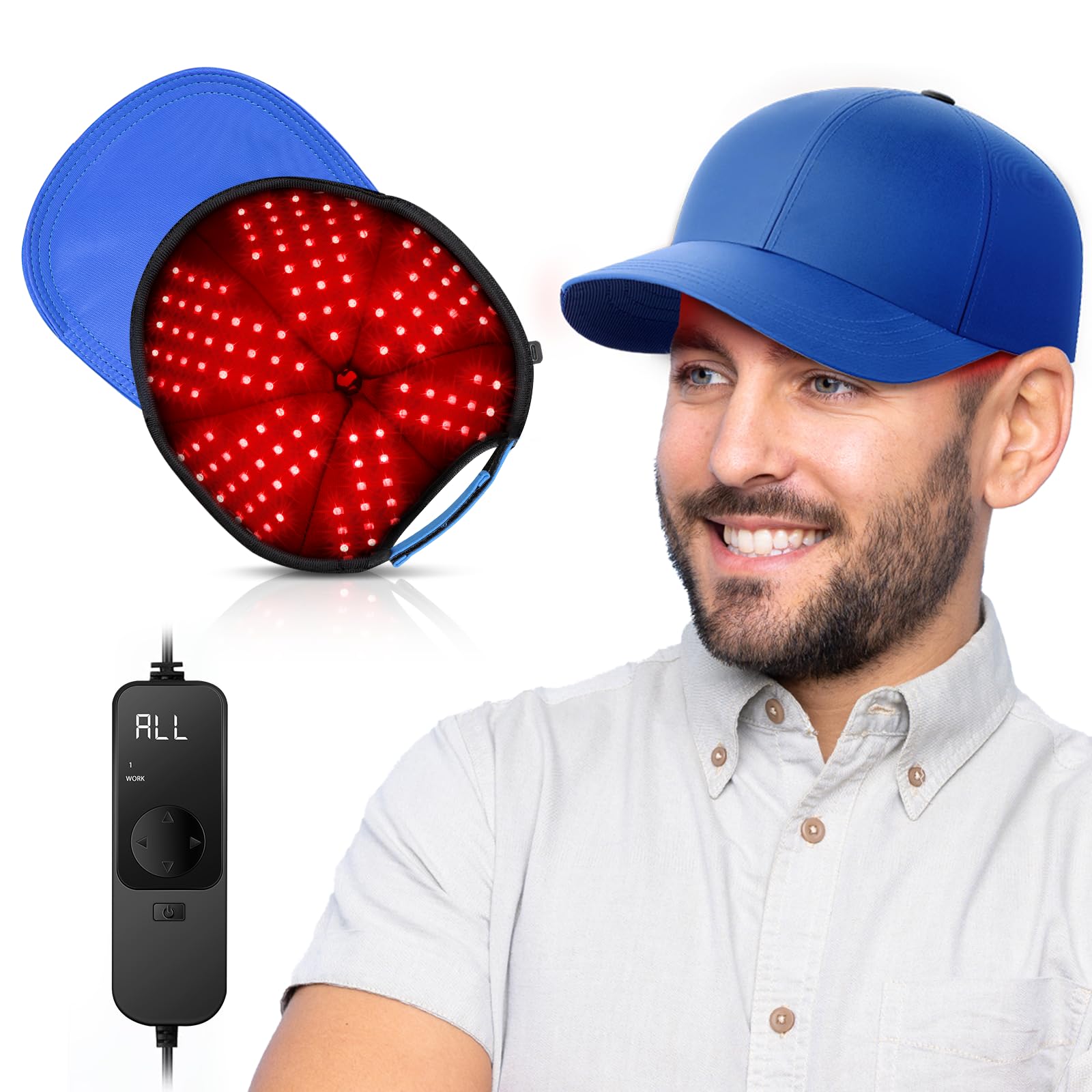
Instead of using traditional laser or LED arrays, the researchers built their system around organic light emitting diode technology, commonly known as OLED.
OLED panels are extremely thin and flexible. Many modern smartphone screens already use this technology. The difference here is that the panels are engineered to emit specific near infrared wavelengths that interact with hair follicle biology.
Because the material bends easily, the light panels can conform closely to the curved shape of the scalp. That detail might seem minor at first, yet it solves a real problem. Traditional rigid devices often leave uneven gaps between the light source and the scalp surface.
Uneven exposure reduces treatment consistency.
By embedding OLED layers inside a soft wearable cap, the researchers created something that resembles a normal hat rather than a medical device. In theory, it could be worn while reading, working, or even walking outside.
Comfort suddenly becomes part of the treatment strategy.
What Happened Inside the Laboratory
Before testing any wearable product on humans, the researchers began with controlled laboratory experiments using human hair cells.
Their focus centered on a biological marker associated with cellular aging. As hair follicle cells age, they begin producing an enzyme called beta galactosidase. Scientists often track this enzyme because its presence signals cellular decline.
The team exposed cultured dermal papilla cells to near infrared light in a very narrow wavelength range between 730 and 740 nanometers.
The results were striking.

Compared to untreated cells, the treated cells showed a reduction of aging related markers close to ninety two percent. When compared to cells exposed to standard red light therapy, the customized near infrared approach performed significantly better.
In simple terms, the light appeared to help the cells behave more like younger versions of themselves.
That does not guarantee hair regrowth in real world conditions, but it offers a strong biological signal worth investigating further.
Why Near Infrared Light Matters
Different wavelengths of light interact with tissue in different ways. Visible red light has already been used in several commercial hair therapy products. However, near infrared light penetrates deeper into biological tissue.
That deeper penetration allows the light energy to reach dermal papilla cells more effectively.
Researchers believe the process influences mitochondrial activity inside the cells. Mitochondria function as microscopic energy generators. When their activity improves, cells often become more resilient and metabolically active.
In the context of hair follicles, stronger cellular energy may help sustain the growth phase of the hair cycle.
Still, biology rarely behaves in a perfectly predictable way. Hair growth depends on genetics, hormones, immune responses, and environmental stress factors.
Light therapy interacts with only one piece of that system.
The Real World Challenge That Comes Next

Laboratory data is encouraging, yet it represents only an early step.
The flexible OLED cap itself has not yet undergone full clinical trials on human participants. This stage will be critical. Many technologies perform well in controlled cell environments but produce more modest results when tested in real conditions.
Human scalps vary widely. Hair density, skin thickness, oil production, and lifestyle habits all influence treatment outcomes.
For example, someone experiencing early thinning may respond differently than someone with long standing advanced hair loss. Similarly, individuals with hormonal driven hair loss could require combination approaches.
The research team is already planning preclinical safety evaluations before moving into larger human trials.
Why Wearability Might Become the Deciding Factor
One subtle but important insight behind this project involves behavioral psychology rather than pure biology.
Treatments only work if people actually use them consistently.
Consider fitness trackers. Many people buy them with enthusiasm, yet after a few months the devices end up in drawers. The same pattern appears with medical devices that feel inconvenient.
A soft, washable light therapy cap changes that dynamic. If the device feels similar to ordinary clothing, compliance rates may improve naturally.
Moreover, the uniform light distribution produced by OLED panels could reduce the need for strict positioning or adjustment.
Consistency often drives outcomes more than raw technical power.
A Closer Look at Hair Aging Itself

Hair follicles operate through repeating cycles. There is a growth phase, a transition phase, and a resting phase. Over time, aging gradually shortens the growth phase while extending the resting period.
The visible result is thinner hair that grows more slowly.
Genetics also play a major role. Pattern hair loss tends to follow predictable shapes because certain follicles respond more strongly to hormonal signals.
What makes the Korean research interesting is its focus on cellular aging rather than hormones directly.
If dermal papilla cells maintain stronger biological activity, the follicle may remain functional longer.
That idea does not replace hormonal treatments. Instead, it suggests a complementary pathway.
Why People Are Paying Attention to Non Drug Solutions
There has been a noticeable shift in public interest toward treatments that avoid systemic side effects.
Many individuals prefer approaches that work locally rather than altering internal hormone levels. Light therapy fits that preference because it targets specific tissue areas without circulating throughout the body.
However, caution remains important.
Even localized treatments require safety validation. Long term exposure to repeated light stimulation must be carefully studied to confirm there are no unintended cellular effects.
The research team has acknowledged this requirement and emphasized gradual testing stages.
The Technology Angle That Makes This Different

Beyond hair biology, this project reflects a broader trend in wearable medical technology.
Flexible electronics are becoming more sophisticated each year. Engineers can now embed sensors and light systems into fabrics without sacrificing durability.
The Korean team is also working on making the cap washable, which sounds simple but involves complex material engineering. Electronic layers must remain protected while maintaining flexibility.
If successful, the same design principles could extend beyond hair treatment. Similar wearable light systems might one day support skin therapy or wound recovery applications.
In that sense, the project sits at the intersection of dermatology and wearable engineering.
Realistic Expectations Still Matter
It is easy to see headlines about ninety two percent cellular improvement and assume a dramatic cosmetic transformation is guaranteed. Reality tends to move more slowly.
Hair growth occurs over months, not days. Even effective treatments often produce subtle changes before visible density improvements appear.
Additionally, not all follicles can be revived. Some become permanently inactive.
Therefore, the most realistic outcome for technologies like this may involve slowing progression while improving regrowth in early stages.
That alone would still represent meaningful progress.
Where Research Is Heading Next
The next phase will likely involve controlled clinical testing with human participants across different hair loss categories.
Researchers will need to measure not only cellular markers but also visible outcomes such as hair density, strand thickness, and growth duration.
Equally important will be long term safety monitoring.
The team has indicated that their ultimate objective is to transform laboratory findings into practical therapeutic tools rather than leaving the work purely theoretical.
That goal reflects a broader movement in biomedical engineering toward wearable, accessible treatment systems.
A Quiet but Interesting Shift in Hair Science
Hair loss research rarely produces sudden revolutionary breakthroughs. Progress tends to arrive gradually through small refinements in understanding.
This flexible light therapy cap fits that pattern.
It does not claim to solve every cause of hair loss. Instead, it focuses on one biological pathway and attempts to improve it with better technology and more precise wavelength control.
There is something refreshing about that approach.
Rather than promising instant transformation, the research acknowledges complexity while still pushing forward.
And in fields like dermatology, that balance often leads to the most meaningful long term results.
If future clinical trials confirm the early laboratory findings, wearable light therapy may eventually move from experimental curiosity into everyday treatment routine.
For now, the idea of a comfortable hat quietly supporting hair biology remains both practical and surprisingly elegant.
Open Your Mind !!!
Source: ScienceAlert


Comments
Post a Comment