Hybrid Eye Cell Discovery Changes What We Know About Vertebrate Vision
A Small Discovery That Quietly Challenges Big Assumptions

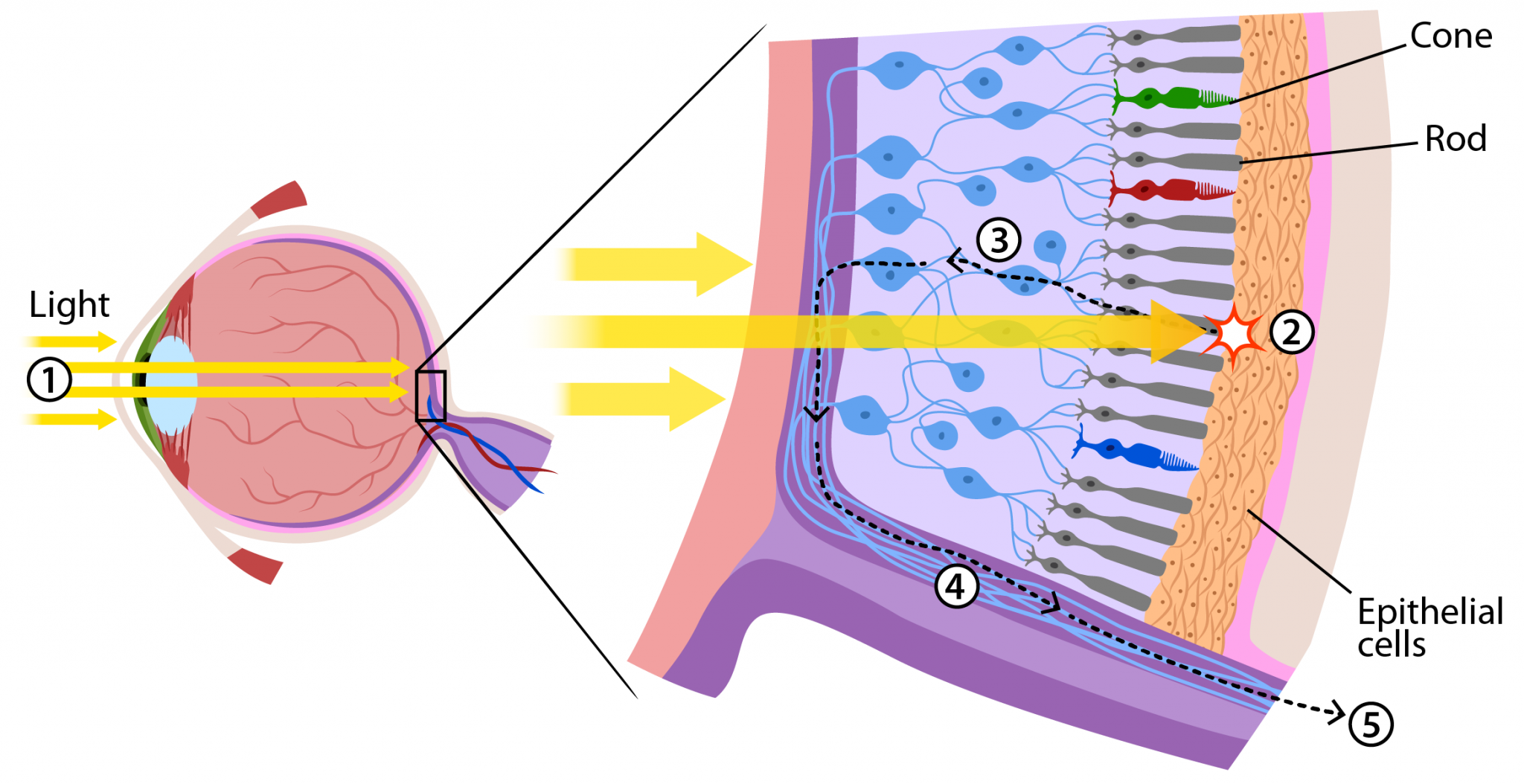
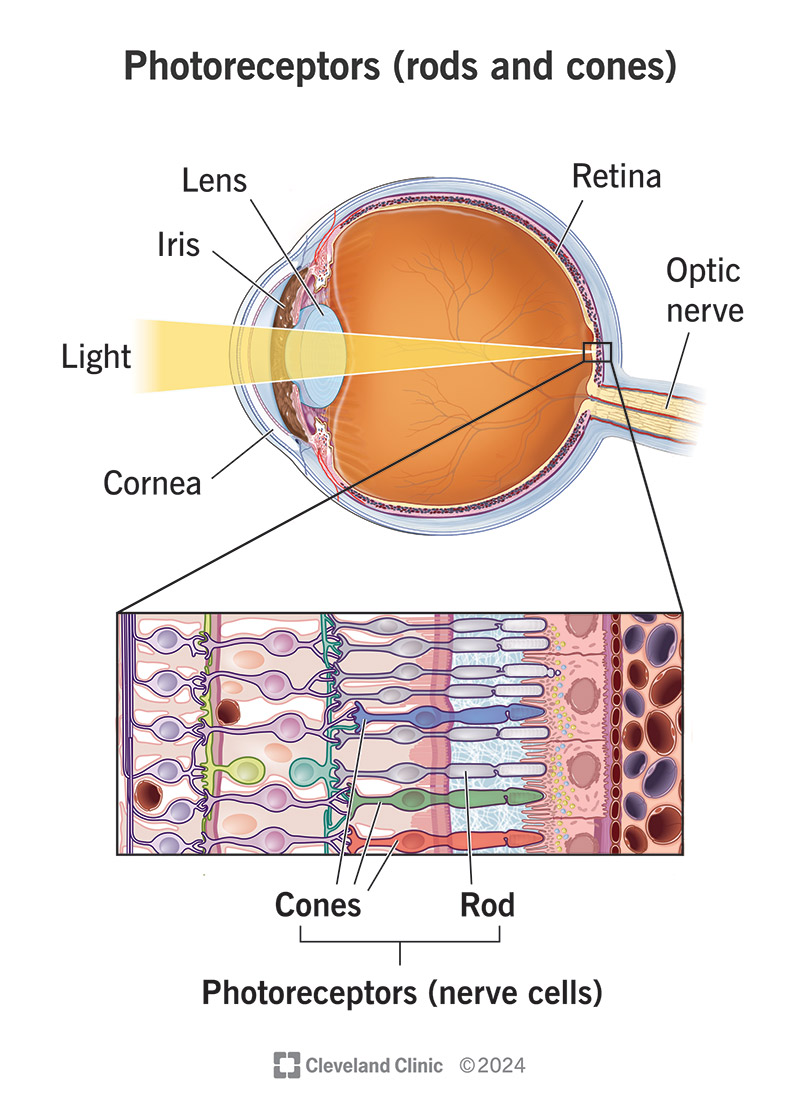
For more than a century, biology textbooks have described vision in vertebrates in a fairly clean and structured way. Two main types of light sensing cells handle the job. Cones manage bright environments and color detail. Rods take over when light becomes scarce. The model is elegant, easy to teach, and for the most part very accurate.
Yet biology has a habit of bending its own rules.
Recently, researchers studying tiny deep sea fish larvae came across something unexpected. Not a minor variation or a slight genetic twist, but a type of visual cell that seems to sit somewhere between the classic categories. It behaves like a hybrid, blending characteristics of rods and cones in ways that challenge long accepted assumptions about how vision develops.
The discovery does not overturn everything scientists know about eyesight. However, it opens a door to a more flexible understanding of how evolution solves problems in extreme environments.
And the deep ocean is certainly one of the most extreme environments on Earth.
The Strange Lighting Conditions of the Ocean Twilight Zone
To understand why this discovery matters, it helps to picture the world these fish live in during their earliest days.
Much of their early development takes place in what oceanographers often call the twilight zone. This region sits roughly between twenty and two hundred meters below the surface. Sunlight still penetrates the water, but not in the way we experience it on land.
Colors begin to disappear. Red fades first, then orange and yellow. Blue wavelengths travel farther, leaving the environment washed in dim bluish tones. Shadows soften and contrast weakens. Objects are harder to distinguish unless the visual system becomes highly sensitive.
For a larval fish barely half a centimeter long, that sensitivity can determine survival. Detecting plankton for food or noticing the outline of a predator requires extracting information from extremely limited light.
In other words, the visual system cannot afford inefficiency.
Looking Closer at the Research Effort
The work was led by scientists connected to University of Queensland, with contributions from marine biologists and visual system specialists working across several institutions. Their findings were published in Science Advances, a journal known for interdisciplinary research spanning biology, physics, and environmental science.
The team collected larval specimens during research expeditions in the Red Sea. Sampling organisms at these depths is not especially easy. The larvae are extremely small and fragile. Their eyes are smaller than a millimeter, which means traditional observation methods are not enough.

Instead, researchers combined microscopy, genetic sequencing, and molecular analysis to examine how the visual cells were structured and how they functioned.
At first, the results looked unusual. Then they became puzzling. Eventually they became genuinely surprising.
The cells did not fit cleanly into either known category.
The Traditional Model of Vision and Why It Has Lasted So Long
Before diving into what makes the discovery unusual, it helps to briefly review why the rod and cone model has remained so stable for more than one hundred fifty years.
Cones are responsible for sharp detail and color perception. They function best in bright environments. Humans rely heavily on cones during daytime activities such as reading or recognizing faces.

Rods behave differently. They are extremely sensitive to low light, but they do not detect color. At night, when colors seem muted or absent, rods dominate visual processing.
This division works extremely well across many vertebrate species. It is supported by anatomical evidence, genetic patterns, and behavioral observation.
Because the model explains so much, scientists rarely expect exceptions.
Yet evolution tends to create exceptions when environments demand them.
The Hybrid Photoreceptor That Blends Two Systems
The newly observed cells appear to combine structural and molecular features of both rods and cones.
On the genetic level, they express components typically associated with cone cells. On the structural level, their shape resembles rod cells. Functionally, they seem optimized for intermediate lighting conditions rather than strictly bright or dark environments.
That combination is particularly useful in the ocean twilight zone where lighting conditions constantly shift but rarely become fully bright or completely dark.
Instead of switching between two specialized systems, these fish appear to rely on a blended system during early development.
This approach may reduce the need for abrupt adaptation as the animals grow and migrate deeper.
Why Larval Development Matters More Than It First Appears
Many deep sea fish do not spend their entire lives at extreme depths. Early in development, they remain closer to the surface where food availability is higher.
As they mature, they gradually descend to darker environments, sometimes reaching depths close to one kilometer.
That transition creates a unique biological challenge.

The visual system must remain functional across dramatically changing lighting conditions. A rigid system optimized only for bright or dark environments might struggle during transitional phases.
A hybrid photoreceptor offers a flexible solution.
It acts almost like an intermediate mode, allowing the visual system to operate efficiently while the organism moves between light regimes.
From an evolutionary perspective, flexibility often beats specialization during early development.
Evolution Rarely Works in Straight Lines
One interesting aspect of this discovery is how it highlights a broader truth about evolution. Biological systems rarely follow neat categorical boundaries.
Instead, they move gradually, experimenting through genetic variation and environmental pressure.
Sometimes those experiments produce structures that do not fit textbook diagrams.
This does not mean the textbooks are wrong. It simply means they describe the dominant pattern rather than every possible variation.

The hybrid photoreceptor may represent one of those variations that remained hidden because the deep sea remains one of the least explored environments on the planet.
Large portions of the ocean are still poorly sampled compared to terrestrial ecosystems.
Every time researchers look more closely, they tend to find something unexpected.
Technical Challenges of Studying Tiny Deep Sea Organisms
Examining larval fish at sub millimeter scales introduces several practical difficulties.
First, collection must occur without damaging delicate tissue. Rapid pressure changes can alter biological structures. Second, preservation methods must maintain molecular integrity for genetic analysis. Third, imaging requires extremely high resolution tools capable of distinguishing cellular structure.
The research team used advanced microscopy combined with molecular markers to identify which genes were active inside the photoreceptors.
This approach allowed them to compare the new cells against known rod and cone patterns.
The result was clear enough to justify describing a distinct developmental pathway.
Possible Applications Beyond Marine Biology

Discoveries like this rarely remain limited to a single scientific field.
Biological systems often solve engineering problems in ways that technology has not yet replicated. Low light imaging remains a major challenge in areas such as underwater exploration, medical diagnostics, and night navigation systems.
If engineers can understand how these hybrid photoreceptors process limited light while maintaining visual clarity, new sensor designs could emerge.
Camera technology already borrows heavily from biological structures. Lens designs and image processing algorithms frequently mimic natural visual systems.
A hybrid structure might inspire adaptive sensors capable of switching sensitivity without losing detail.
Medical Research Implications
There is also potential relevance for human eye research.
Understanding how organisms build flexible photoreceptor systems could provide insight into retinal diseases. Conditions that affect photoreceptor degeneration, such as glaucoma or retinal dystrophy, involve complex interactions between genetics and cellular structure.
If scientists learn how these deep sea fish construct and maintain hybrid photoreceptors under high pressure and low light conditions, similar biological pathways might inform therapeutic research.
While practical treatments are still distant, foundational discoveries often begin with unexpected biological observations.
A Reminder That Extreme Environments Drive Innovation
Extreme environments tend to accelerate biological creativity.
Deserts produce water retention adaptations. Arctic ecosystems produce thermal regulation mechanisms. Deep oceans produce sensory specialization.
In low light ecosystems, vision becomes a survival tool rather than a convenience.
Even slight improvements in sensitivity can influence feeding success and predator avoidance.
That pressure encourages experimentation at the cellular level.
Over long evolutionary timescales, those experiments accumulate into structural innovations.
Scientific Caution Still Matters
Although the discovery is exciting, scientists remain careful about interpretation.
A single type of hybrid photoreceptor does not replace the rod and cone model. Instead, it expands the framework.
Further research will need to examine how widespread these cells are across species and developmental stages.
It is also possible that similar structures exist in other environments but have not yet been identified.
Scientific progress often involves refining models rather than replacing them completely.
This discovery appears to fall into that category.
The Role of Collaborative Research
The project involved collaboration between multiple research institutions and funding support from organizations including the Australian Research Council and other international partners.
Large scale biological studies increasingly depend on cross disciplinary teams. Marine biology, genetics, microscopy, and computational analysis all contribute different pieces of the puzzle.
Without that combination, identifying a hybrid cellular structure at this scale would be extremely difficult.
Modern biology is becoming less about isolated discoveries and more about integrated observation.
How Discoveries Like This Change Scientific Thinking

When people imagine scientific breakthroughs, they often picture dramatic paradigm shifts.
In reality, most discoveries operate more quietly.
They introduce nuance.
They add complexity.
They encourage scientists to revisit assumptions that once seemed fully settled.
The hybrid photoreceptor discovery fits this pattern.
It does not rewrite the fundamentals of vision. However, it reminds researchers that biological systems remain flexible and adaptive, especially under environmental pressure.
That reminder is valuable.
The Deep Ocean Still Holds Many Surprises
Despite advances in exploration technology, the deep ocean remains one of the least understood ecosystems on Earth.
Large areas have never been directly observed. Many species remain undocumented. Even familiar species often reveal new characteristics when studied at molecular levels.
Each improvement in imaging and genetic analysis opens another layer of biological detail.
The discovery of hybrid photoreceptors may be only one example among many waiting to be uncovered.
As research tools become more precise, the boundary between known and unknown continues shifting.
Seeing Biology as a Dynamic System
One broader takeaway from this research is conceptual rather than technical.
Biology works best when viewed as a dynamic system rather than a static diagram.
Textbooks provide structure and clarity, which is necessary for learning. However, real organisms exist in environments that constantly change.
Adaptation follows that change.
Cells evolve. Pathways diversify. Structures blend.
The hybrid photoreceptor illustrates how nature often avoids rigid categories when flexibility improves survival.
A Quiet but Meaningful Shift in Understanding Vision
In the end, the discovery does not dramatically alter how humans see the world. Our own visual systems still rely primarily on rods and cones.
Yet understanding how other organisms solve visual challenges expands the scientific toolkit.
It encourages new questions.
Could hybrid systems exist in other species. Could intermediate photoreceptors play roles during development in ways not yet documented. Could adaptive visual pathways inspire new technology.
Each question leads to further exploration.
And that is how science moves forward.
Not through certainty alone, but through curiosity shaped by observation.
The deep sea, dim and vast, continues to provide both.
Open Your Mind !!!
Source: SciTechDaily


Comments
Post a Comment