Could We Truly Be the Very First Advanced Civilization on Earth?
Could We Truly Be the Very First Advanced Civilization on Earth?
A Radical Question from NASA Scientists
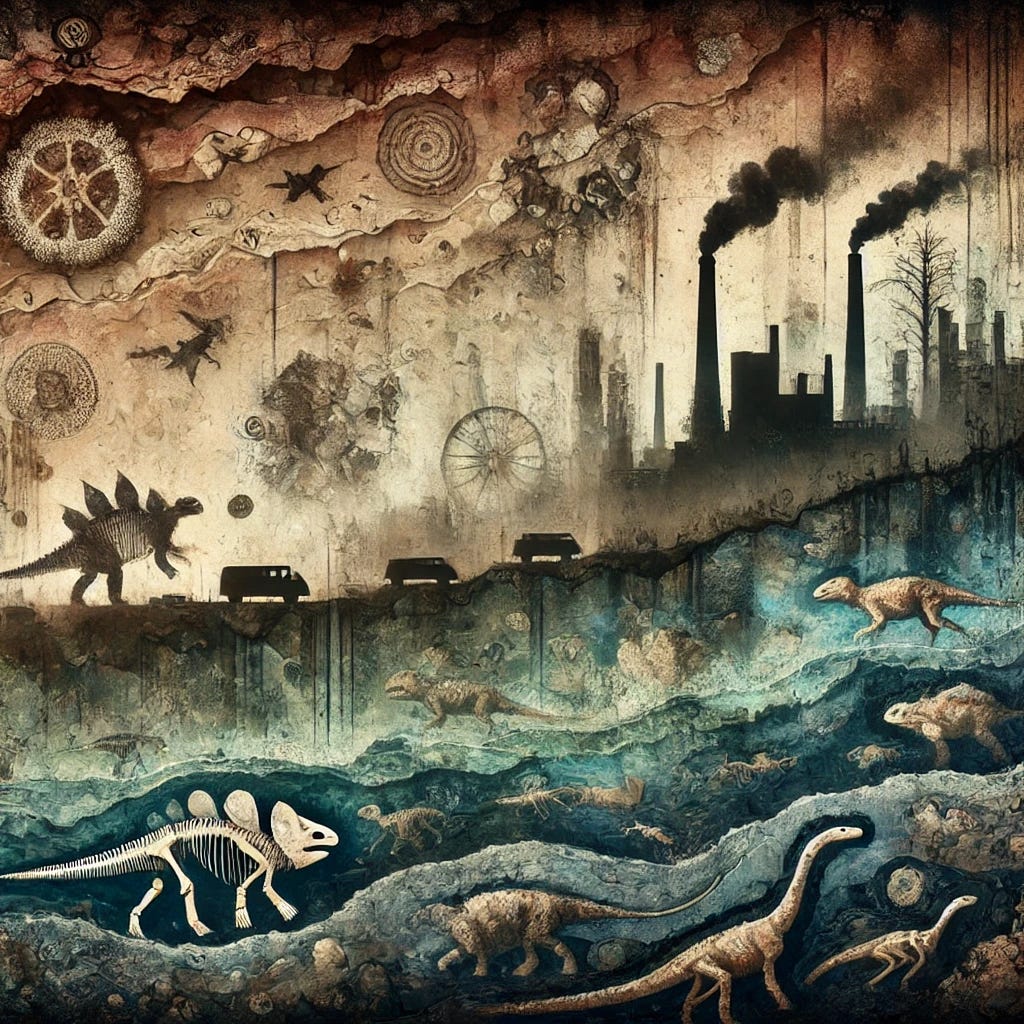
Imagine for a moment: What if humanity is not the first advanced civilization to ever roam this planet? It sounds like pure science fiction, but a serious theory proposed by NASA scientists Gavin Schmidt and Adam Frank asks exactly this. Known as the Silurian Hypothesis, this concept wonders whether any truly industrial civilization might have risen and fallen on Earth millions of years before humans existed—and if so, could any trace of it still be detectable today?
This idea, first outlined in a thoughtful research paper published in 2018, nudges us to reconsider everything we think we know about Earth’s history. Rather than speculating wildly that dinosaurs built cities underground, Schmidt and Frank explore how geological and chemical markers in Earth’s crust and atmosphere might reveal the former presence of advanced societies. And even if no physical ruins remain, could there still be chemical “ghosts” hidden in rocks and sediments, waiting to tell a forgotten story?
Why We Might Be Clueless About Earlier Civilizations
Geological Time Erases Almost Everything
-
Earth’s history spans around 4.5 billion years, yet modern humans have been around for a mere 200,000 years.
-
Our industrial society—the one that shapes our climate today—has been active for just 300 years.
-
Geological processes like wind, rain, plate tectonics, and erosion relentlessly erase the physical record of our existence. Urban structures, roads, and buildings deteriorate and eventually vanish.
Even the fossilized remains of humans, recent in geological terms, are rare. City foundations or manufactured tools older than a few thousand years would be nearly impossible to find intact after tens of millions of years. If a civilization existed millions of years ago, direct evidence—such as fossils or artifacts—could easily have disappeared entirely.
Why Physical Evidence Might Be Gone
-
Ocean crust, which captures much of Earth’s sediment history, is recycled approximately every 170 million years.
-
On land, intact ancient surface layers are extremely scarce.
-
Less than 1% of Earth’s surface is urbanized today—and in a few million years, much of that becomes buried or worn away.
In essence, the longer ago something existed, the less likely it is that any tangible traces survive today.
Searching for Invisible Clues: Geochemical Footprints
A Civilization’s Lasting Signature
Even if physical structures vanish, an industrial civilization could leave behind distinct geochemical footprints—subtle changes in Earth’s atmosphere, ocean chemistry, or sediment records. Schmidt and Frank identify several markers that might endure across deep time:
-
Carbon Isotope Flux
Burning fossil fuels releases carbon dioxide depleted in heavier carbon isotopes (^13C), producing a characteristic shift in the geological record. -
Oceans Warming and Acidifying
Changes in ocean pH, temperature, and carbonate skeleton deposits can reflect massive carbon emissions. -
Persistent Synthetic Chemicals
Long-lived compounds like plastics, PCBs, and radioactive isotopes from nuclear fallout could scatter through sediments.
Such markers might be measurable—even after millions of years—offering clues to past industrial activity.
Short-Lived vs Long-Lived Civilizations
-
Short-lived, fossil-fuel-based civilizations would likely create strong carbon spikes and heavy pollution—leaving a big footprint.
-
Long-lived, green-energy civilizations might be nearly invisible geochemically, leaving only faint traces.
This paradox means that sustainable civilizations could be virtually undetectable, while brief, destructive ones could announce their presence loudly—even if briefly.
Ancient Climate Events: Possible Parallels to Civilization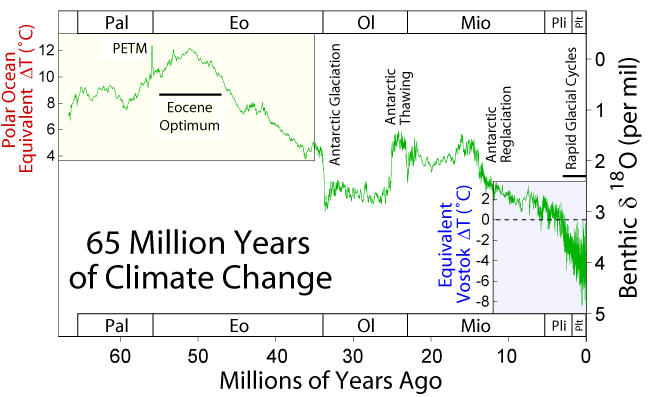
Several dramatic climate events in Earth’s distant past bear similarities to our modern carbon-driven warming. Could they hint at vanished civilizations? Or are they purely natural phenomena?
The Paleocene–Eocene Thermal Maximum (PETM) (~56 Million Years Ago)
-
Temperatures rose about 5–8 °C over a few thousand years.
-
Carbon released was depleted in ^13C isotopes—mirroring human fossil fuel emissions.
-
Ocean acidification spiked.
-
Rapid sedimentation and extinction events occurred.
These conditions echo today’s Anthropocene changes—and some wonder if human-like industries played a role. But mainstream science attributes PETM to natural causes like volcanic eruptions, release of methane from ocean sediments, and tectonic shifts.
Other Ancient Warming Episodes
-
Ocean Anoxic Events during the Cretaceous and Jurassic periods left behind black shale layers and carbon isotope anomalies.
-
These coincide with volcanic activity and large-scale environmental upheaval.
Again, until we find overwhelming evidence, attributing them to ancient civilizations is speculative. Schmidt and Frank emphasize we must first confirm natural causes before considering intelligent agents.
The Real Value of the Silurian Hypothesis
Why This Thought Experiment Matters
While it may seem fanciful, the Silurian Hypothesis is deeply useful. It teaches us:
-
We know very little about Earth’s deep past when it comes to industrial activity.
-
Civilizations, no matter how advanced, may leave only the most traceable geochemical clues in the long run.
-
Searching for ancient civilizations encourages scientists to rethink what markers we should study, from isotopic carbon shifts to artificial chemicals in deep-sea cores or lunar soil.
Implications for Humanity and Astrobiology
-
The hypothesis highlights that if advanced societies routinely collapse or shift to near-zero-impact lifestyles, their signatures may vanish quickly—raising questions about long-term civilizational sustainability.
-
For mankind: Will our carbon-induced climate crisis eventually leave an unmistakable geological scar—or could future generations misconstrue it as just another natural warming episode?
-
For astrobiologists: When exploring Mars, Venus, or exoplanets, searching for unusual chemical patterns might be more fruitful than seeking physical city ruins.
How Could We Test for Ancient Industrial Civilizations?
Schmidt and Frank propose several strategies:
-
Analyze Carbon Isotope Ratios
Track δ^13C values in sediment layers worldwide. A sudden negative shift, unexplainable by volcanism, could be significant. -
Deep-Sea and Core Sample Drilling
Examine very old sediments for unusual findings: plastics, synthetic molecules, elevated heavy metals, radiation isotopes like plutonium-244. -
Look Beyond Earth
The Moon and Mars, with minimal erosion, might preserve artifacts or chemical traces long after Earth’s record is gone. -
Study Iron and Nitrogen Cycles
Synthetic fertilizers, massive land use changes, or mining efforts could leave detectable anomalies in rock layers.
Together, these approaches build a powerful toolset to detect—or decisively rule out—the signs of any industrial-age civilization before us.
Earth's Future: Lessons from the Past…and Maybe the Future
A compelling twist of the Silurian Hypothesis is its modern-day resonance:
-
What we leave behind matters. If our active carbon emissions, plastics and nuclear experiments become the markers geologists study millions of years from now, our legacy will be permanent.
-
Sustainability matters. A solar-powered, zero-plastic civilization wouldn’t leave the same glaring signals. Our growing awareness of environmental impact may become a pathway to near-invisibility in geological time.
-
Monitoring ancient events helps today. By studying the PETM and other warming events, we learn directly about Earth’s response to sudden, large-scale greenhouse gas inputs.
-
The search for extraterrestrial intelligence (SETI) could benefit by expanding beyond radio signals: planetary surface chemistry might hold the key to external civilizations.
In Summary: The Silurian Hypothesis Revealed
| Key Insight | Description |
|---|---|
| We likely aren’t the first potential civilization | Given Earth’s age (4.5 billion years), any prior industrial era might have vanished without a trace. |
| Physical ruins don’t survive deep time | Erosion, tectonics, subduction ensure structures older than a few million years likely no longer exist. |
| Geochemical signs may linger | Carbon shifts, plastics, radioisotopes, and chemical soil changes are more durable and measurable across geological epochs. |
| Ancient climate spikes offer analogues | Events like PETM mirror modern warming—but natural causes remain the leading explanations. |
| The experiment shapes our search strategies | Offers a model for detecting past civilizations on Earth and beyond via sediment chemistry, not ruins. |
A Final Thought
As Schmidt and Frank note, they don’t believe an industrial civilization lived millions of years ago. Instead, they aim to show us the limits of our knowledge and sharpen our awareness of what signals truly matter. By asking bold questions like this, we learn to appreciate how fragile and fleeting civilizations can be—and how important it is to look carefully for signs, both on Earth and elsewhere in the universe.


Comments
Post a Comment